
HRF Renews Support for the 256 Foundation
By 256 Foundation
On August 25, 2026, the Human Rights Foundation awarded the 256 Foundation a new grant through its latest round of the Bitcoin Development Fund, continuing HRF's ongoing support for our work building the open-source Bitcoin mining stack. The grant will be put right to use, as Lead Maintainers of Mujina Mining Firmware, Ember One Hashboard, Libre Board and Hydrapool Mining Pool are working hard to keep up momentum behind these live community projects.
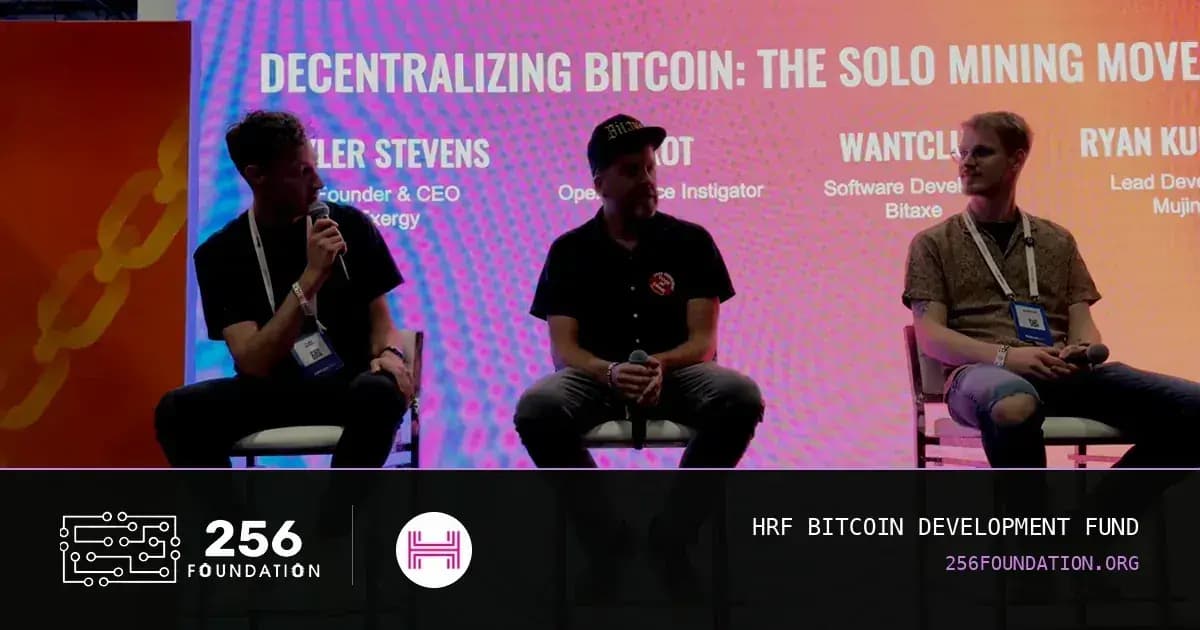
At Bitcoin 2026 in Las Vegas we joined the HRF stage for a panel on decentralizing Bitcoin mining and the open-source stack that makes it possible. Tune in to see why it's important.
Watch the panel → Decentralizing Bitcoin: The Solo Mining Movement
We are grateful for the continued support and want to be specific about the state of the work, because the honest story here is a good one.
What's Already Working
Across our Core Projects, Ember One, Libre Board, Mujina and Hydrapool, real work is already in motion. Mujina, the Linux kernel of Bitcoin mining, is being developed into RY3T's Nova, a home mining product now in development that runs surplus solar power straight to hashrate. Biweekly developer calls are ongoing with active community contributions and discussion. Our hardware reference design, Libre Board, has had funding paused for months. This grant from HRF will directly help us polish the latest revisions and validate hardware.
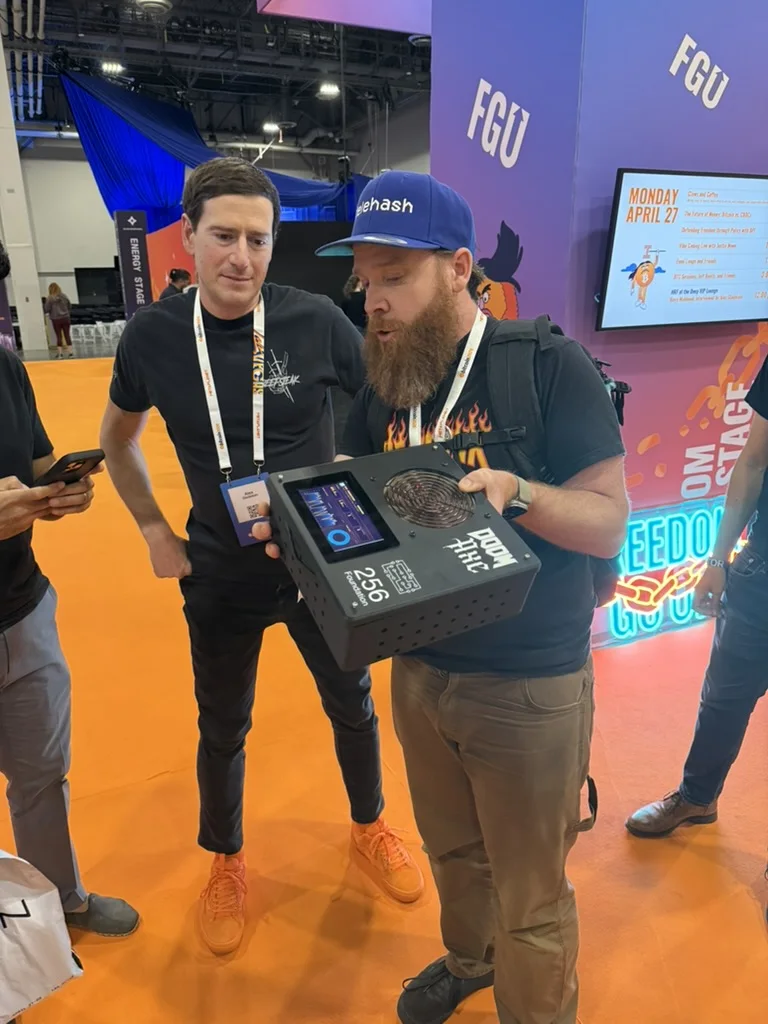
Schnitzel, Lead Maintainer of Libre Board, walking Alex Gladstein of HRF through a 256 Foundation mining unit at Bitcoin 2026.
What's actually scarce is not interest. It is grant-funded maintainer time to review what the community is already building, ship it, and validate it properly. This kind of maintenance work by Lead Maintainers is critical to the success of the open-source Core Projects we kickstarted.
From Reference Design to Hardware in Hand
Our hardware Core Projects are past the point of proving the idea works. What is left is finishing remaining revisions, reviewing community contributions, and getting a validated reference design in front of builders.
We are dismantling the proprietary mining empire.
Why This Matters to Human Rights
Bitcoin is freedom money. It is secure, censorship resistant, and accessible to anyone with an internet connection, regardless of what government they live under or what permission they've been denied. Mining is not a side function of that promise. It is where the promise gets enforced.
Mining:
- settles every base-layer transaction
- puts monetary rewards into the right hands through the block subsidy and transaction fees
If mining hardware, firmware and pool software are closed, nobody outside a handful of manufacturers can verify that settlement and issuance are actually happening the way Bitcoin's rules say they should. An open mining stack means anyone can inspect it, confirm there are no backdoors, and trust the network's most foundational guarantees without having to trust a company.
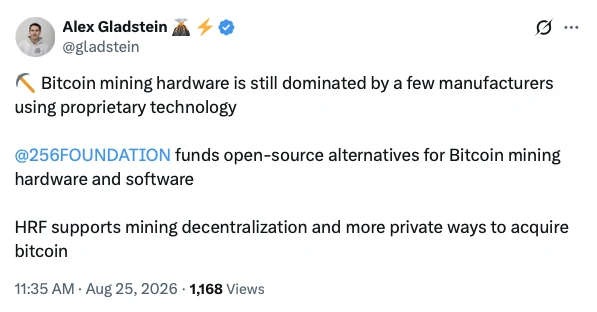
Open source also means the stack is not built for one kind of miner. A closed, industrial-grade machine assumes access to power, capital, and infrastructure that much of the world does not have. An open mining stack lets someone build hardware that fits the energy and resources they actually have access to, and still compete for a share of network rewards. Combined with Hydrapool, our open mining pool, that means permissionless participation in the network for people who would otherwise be locked out of it entirely. That is why this work sits inside HRF's mission, not adjacent to it.
Get Involved
The open-source mining stack is only as strong as the people building it. If you want to help close the gap between what's already been built and what's actually shipped:
Review or contribute code → github.com/256foundation
Join the conversation → forum.256foundation.org
The 256 Foundation is a 501(c)(3) nonprofit directly funding the Core Contributors building the open-source Bitcoin mining stack. Become a supporter →