
Our Work
We are commoditizing the Bitcoin mining stack.
The 256 Foundation is a 501(c)(3) nonprofit funding the open-source stack, because a company cannot do this and a closed industry will not.
“Bitcoin mining will be open-source, or Bitcoin remains permissioned.”
Every mature industry eventually runs on commoditized inputs: recipes anyone can read, use, and improve. Open source is the final form of a mature industry. Aluminum has its process, servers have Linux, and the web runs on TCP and HTTP.
Bitcoin mining has not arrived there yet. A company is the wrong vehicle to take it there, because a company has an edge to protect. As a nonprofit, we have nothing to protect: success means anyone can compete with our work.
A modern miner is four building blocks, and each one is closed or concentrated.
Hash board
Mining chips ship with no datasheets, no pinouts, and no way to buy them on their own.
Control board
The board that runs the machine silently decides what a miner is allowed to be.
Firmware
Firmware is unauditable, so you cannot verify it is not skimming hashrate or holding a kill switch. Antbleed proved it.
Pool
The server side of mining is concentrated, and trusting an operator is the only way to aggregate hashrate.
The Mining Stack page sells the projects. This is the problem they answer. See the stack →
A miner can be more than a data center black box. It can be a water heater, a solar and battery rig, an off-grid machine. Miners should come in every shape.
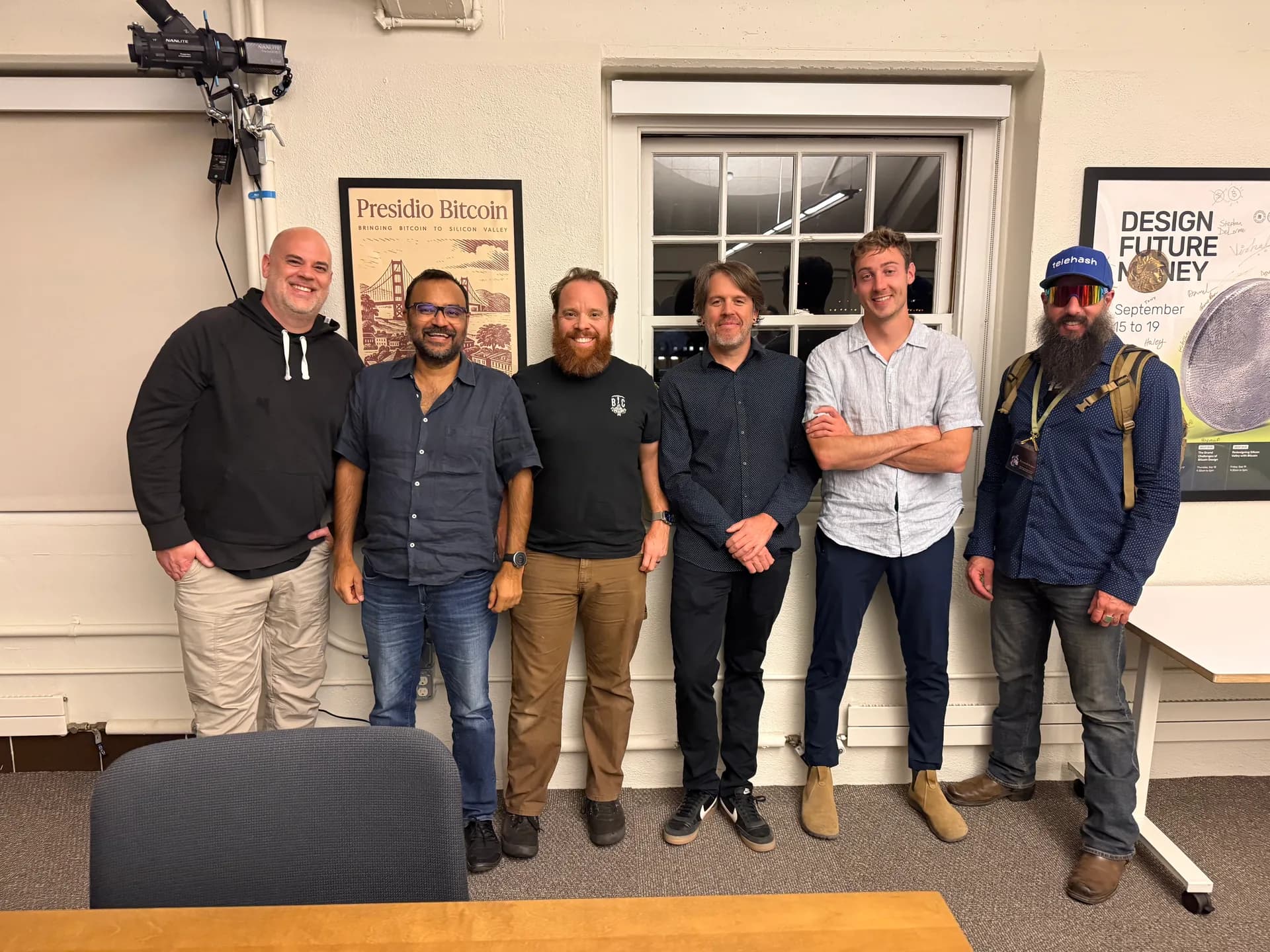
The first TeleHash event found a Bitcoin block, raising the initial BTC that seeded the core projects.
We reverse-engineered recipes that had never been open-source. Nine months later, early versions of everything ran together in a single working system.
Four independent projects that combine into one open-source mining development kit, free for anyone to study, fork, and build a business on.
Every grant runs under a written scope, board approval, and a grant agreement that keeps the work open-source, paid monthly under renewable terms. There are two doors.
How grants work →The Development Kit is the start. The programs are what comes next.
Red Team Program
Reverse engineering closed firmware and coordinating disclosure: report, wait 30 days, publish.
Working Group Program
Convening the industry around published standards such as Stratum V2. Host the work, do not own it.
Stewardship
A neutral nonprofit home for the dependencies the industry relies on, such as ASIC-rs. We will not transfer the repo, will not take exclusive rights, and will not accept funding conditioned on ceding control.
Community Program
Fiscal sponsorship for OSMU and Hashrate Heatpunks: two restricted funds, community-directed, with the board approving every allocation. Never Core Projects Program money, never operating costs.
Education
Developer calls, the forum, the podcast, and the newsletter, plus teaching the stack in person.
The best one-line description of our role: the Linux Foundation of Bitcoin Mining.
Commoditizing an industry is long and expensive, and core contributors deserve multi-year funding to see it through.
Become a supporter →